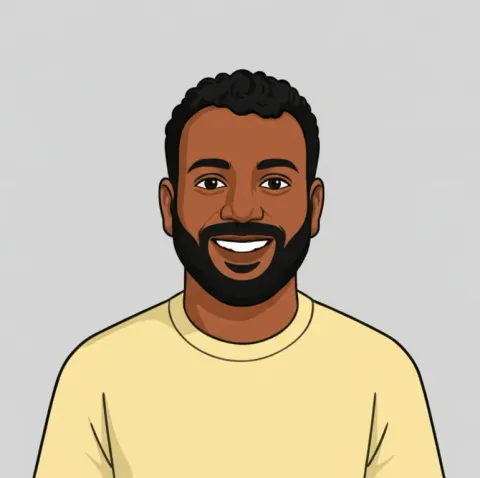
I’m a Staff Data Engineer working across data platforms and applied AI. I turn business questions into systems people can use—from the data underneath to the agents and interfaces on top.
The part that keeps pulling me in is everything around the model. What should a system remember? When should it reach for a tool, and when should it admit it cannot know? How do you check an answer before someone acts on it? I like making those choices visible, then testing the assumptions behind them.
Where the work meets the world
Real problems. Useful systems.
Data foundations, applied AI, and the people who use them.
Every night a pipeline restores a database from last night’s backup into a scratch copy, compares it with the live one, and alerts when anything is off.
I work with the people closest to a problem to understand the decision they need to make. A clear question gives the engineering a purpose.
02
Build the foundation.
I connect the right data, give it a useful shape, and build a dependable path through the system. That foundation supports the reporting and AI experiences above it.
03
Stay for the hard parts.
I stay involved after delivery: watching how the system is used, responding when it fails, and turning what we learn into a better next version.
A little interactive detour
Same model. Different journeys.
Inference has more than one moving part. Follow a request, then change the conditions around it.
Choose a scenario. Each change plays once, then settles.
A serving system makes choices about compute, waiting, and reuse.
From prompt to response
First, the model processes the prompt (prefill). Then it generates new tokens step by step (decode). Both stages use inference; the sketch follows a single request through them.
A single request is easy to follow. It does not show how well hardware is used under load.
Share the work, watch the wait
Batching lets a serving system work on several requests together, which can improve hardware utilization. A request may wait to enter a batch. The policy has to balance throughput against time spent waiting.
Batching is a scheduling choice. It does not guarantee a faster response for every request.
Reuse the beginning, compute what comes next
When requests share an exact prefix and its cached state is available, the server can reuse that earlier computation. The remaining prompt still needs processing, and each response still needs inference to generate new tokens.
Reuse depends on a valid cache hit. It saves some prefix work, not the entire response.
From a mini PC to a GitOps platform: the architecture, monitoring, and lessons behind the cluster my projects run on.
A person behind the pixels.
A little about me
Serious about the work. Curious about everything.
I’m Sudharsana Rajasekaran. I build data and AI systems with one eye on the technical details and the other on the people using them. I enjoy following a problem all the way through: listening, finding the shape of it, building something useful, and learning from what happens next.
My path has taken me through business intelligence, telecom analytics, data center infrastructure, and B2B platforms. That experience shapes how I approach AI today: with care for the data underneath, the decisions it supports, and the responsibility of running the system. My personal projects give that curiosity more room to roam.
The longer story
A career in connected chapters.
Retail, tech, telecom. A thread of making information useful.
01
March 2022 — present
Platforms meet applied AI
Walmart Global Tech
Staff Data Engineer
I connect the data foundation of a B2B business to the teams making decisions: revenue intelligence, a shared customer picture, and AI workflows for Sales and Marketing. I stay involved in the reliability of the systems behind them.
02
August 2020 — March 2022
Data for infrastructure
Google · contract
Data Engineer
I built data workflows for the people planning and operating data center infrastructure, bringing field data and supply-chain information into a clearer reporting picture and helping systems move to a new platform.
03
September 2019 — May 2020
Signals from the real world
Ericsson
Data Analyst Intern
I worked with network data and computer vision to support 5G planning, using automation to make reporting and image-labeling work easier for the teams involved.
04
June 2014 — June 2018
Where the questions started
Cognizant
Business Intelligence Consultant
I worked closely with clients across several industries to turn business questions into data models, reports, and dashboards, while leading a development team through delivery.
The foundation underneath
Engineering meets analytics.
M.S. in Business Analytics (Data Science) The University of Texas at Dallas · 2020
B.E. in Electronics & Communication Engineering Anna University · 2014
✳
A recent milestone
Google Cloud Certified Professional Data Engineer
June 2026
Have an interesting problem?
Let’s make something useful.✳
I’d love to talk about AI systems, engineering, and what you’re building.